Understanding the Mobile App Development Process Through Design
The mobile app development process is more than just coding and functionality—it’s a visual journey that shapes user experience, brand perception, and digital communication. For designers and creatives, understanding this process opens up opportunities to craft compelling interfaces, intuitive workflows, and cohesive brand identities that resonate across platforms.
Why Visual Design Matters in App Development
Visual design plays a pivotal role in every stage of the mobile app development process. From wireframing to final UI execution, thoughtful design choices influence usability, engagement, and brand recognition. A well-structured visual narrative not only guides users through the app but also reinforces brand values and aesthetic consistency across digital and print design applications.
Designing for Brand Identity and Consistency
When integrating the mobile app development process into a broader brand strategy, designers must align visual elements—such as color palette, typography, and iconography—with existing brand identity systems. This ensures seamless transitions between web design, packaging design, and social media graphics, creating a unified brand experience across all touchpoints.
- Use consistent color schemes and font pairings
- Maintain visual hierarchy across UI components
- Ensure logo design and brand icons scale across devices
Practical Applications of Mobile App Development Infographics
Infographic templates—especially those illustrating the mobile app development process—serve as powerful tools for presentations, marketing materials, and editorial design. These visual storytelling assets simplify complex workflows into digestible, engaging layouts that resonate with both technical and non-technical audiences.
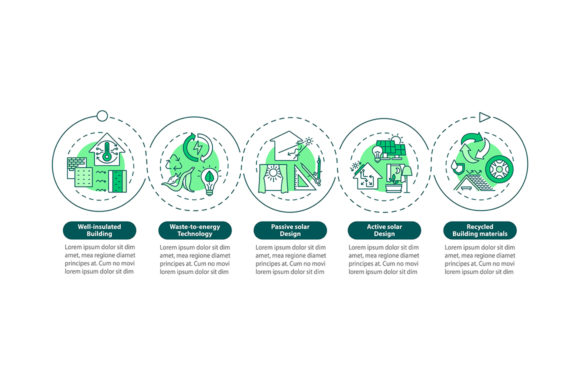
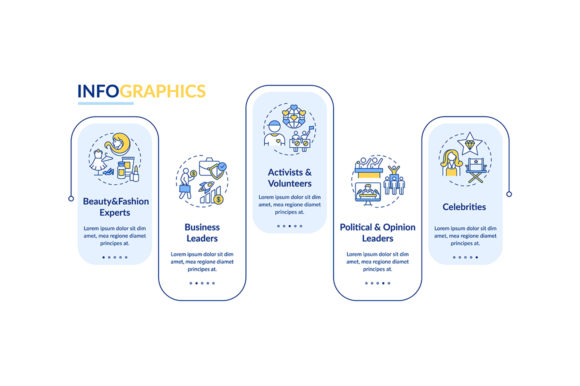
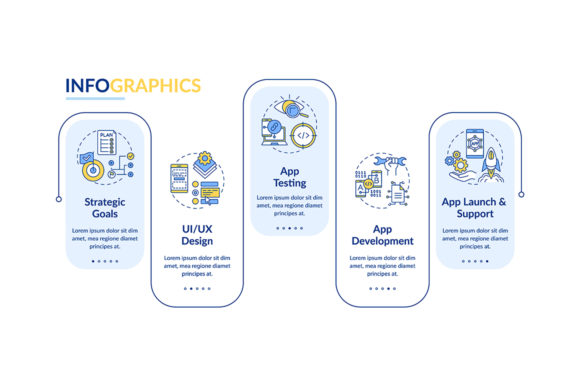
With a vector infographic template featuring a process timeline chart, designers can showcase a 5-step workflow using linear icons and modern aesthetics. These templates are ideal for:
- Strategic goal presentations
- Digital marketing campaigns
- Internal design team alignment
- Client-facing project proposals
- UX research documentation
Choosing the Right Design Elements
When selecting design assets for a mobile app development presentation, prioritize scalability, clarity, and adaptability. Vector-based files like EPS, AI, and SVG offer flexibility across print and digital formats, while JPG and PNG ensure compatibility for web use and social media graphics.
Consider the following when evaluating design elements:
- Readability: Ensure text remains legible at various sizes
- Consistency: Maintain uniformity in icon style and layout
- Compatibility: Match the template’s aesthetic to your brand guidelines
- Customizability: Choose templates that allow easy editing of colors, fonts, and layout
Enhancing User Experience Through Visual Design
At its core, the mobile app development process is about solving problems through design. Whether creating a user interface or crafting a presentation layout, the visual components must support usability and enhance the overall experience. This is where principles of UX design, visual hierarchy, and editorial design converge to guide the viewer’s attention and improve comprehension.
For instance, a process timeline chart built with linear icons can visually break down the development stages—from ideation to launch—while maintaining a clean, professional presentation style. These visual cues help audiences absorb complex information quickly and retain key messages longer.
Integrating Typography and Color for Impact
Typography and color are foundational to any design project, including mobile app development visuals. A well-chosen font can convey professionalism or creativity, while strategic color use can highlight important steps or differentiate stages in a workflow layout.
When designing presentations or infographics:
- Select fonts that reflect your brand personality
- Use contrasting colors to emphasize key steps
- Incorporate white space for visual breathing room
- Ensure accessibility through color contrast compliance
By thoughtfully applying these visual design principles, creative professionals can elevate the mobile app development process from a technical roadmap into a compelling visual narrative that supports brand storytelling, user engagement, and strategic clarity.